A scene from your world
Four seconds at the loop
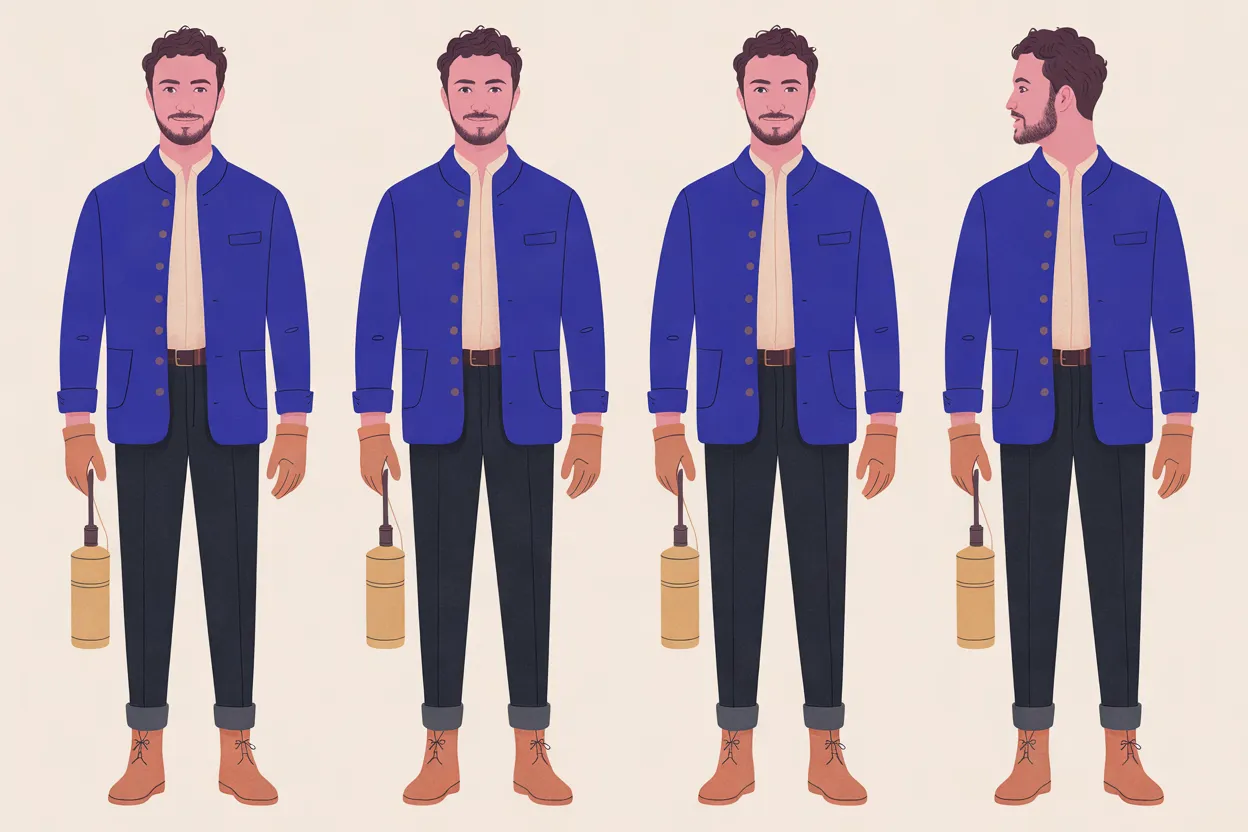
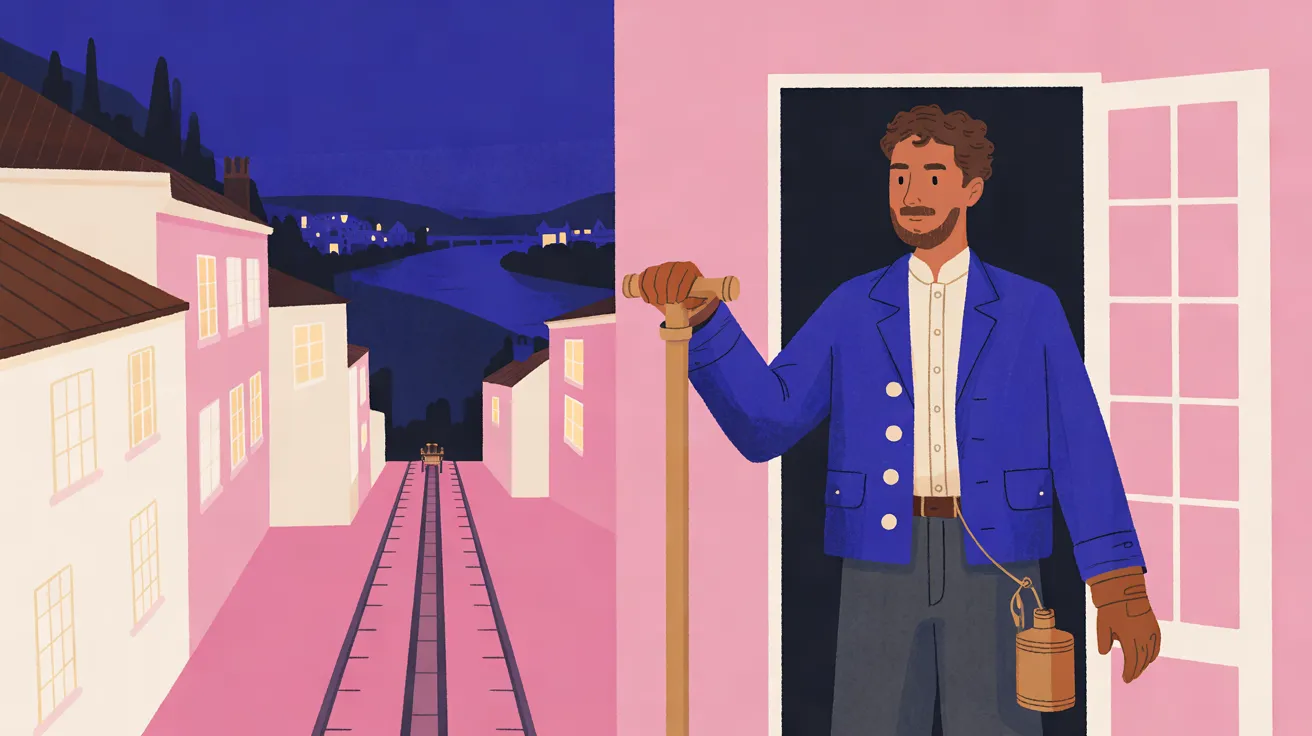
The Funicular Operator climbs the last steps to the wheelhouse a little before dusk, when the stone is still warm from the day and the river below has begun to turn the color of plums. He hangs his jacket on its hook, pulls on the leather gloves and lays one hand on the brass lever, worn bright where the glove goes. Overhead the great wheel waits with the cable wrapped twice around it, oiled at noon.
There are two cars on the hill and one cable between them. The rose car waits at the bottom station by the river; the dark car sits at his feet. When one goes up, the other must come down. That is the whole arrangement, and it has never once failed to be fair. Far below, the signal lamp at the bottom station blinks twice: the doors are shut. He eases the lever forward.
The cable hums. From the note he can tell that the rose car is nearly full and that someone near the back has brought something long and square, perhaps an easel. The dark car slides away from the platform and down between the cream houses, empty except for the woman from the bakery, who rides it down every evening and up every morning and has never once got on the wrong one.
Halfway down, the track splits into the passing loop, and that is where the evening happens. The two cars come toward each other as slowly as a sentence, and for four seconds they are side by side: the rose car’s lamp lights the dark car’s windows, the dark car’s lamp lights the rose car’s, and everyone on the hill looks across at a stranger going the other way. Then the rails join again and the cars are apart.
At the top the rose car settles against the platform with a sigh of brakes. The passengers step out saying they did not feel a thing, which he takes as the compliment it is. The last one off is a young man with an easel under one arm, who asks whether this is the hill with the famous view. “That one is across the river,” says the Operator. “This is the other one.” He says it kindly. He has said it a great many times.
The young man looks disappointed for about as long as it takes to turn around. Below him the whole town is lighting up window by window, the cherry trees along the track have gone pink in the last of the sun, and the river is holding the sky. He sets the easel up right there on the platform. The Operator goes back to the lever, and the rose car starts down, and the dark car starts up, and they meet exactly halfway, as they do.
Later, with the windows all lit and the easel packed, the young man asks what this hill is called, to write it on the back of the canvas. The Operator tells him. The young man writes it carefully, spelling it under his breath, and gets it right the first time, and the Operator, who had been ready to correct it, finds he has nothing to say, and for once says nothing at all, and smiles.